 See photos and updates from listings directly in your feed
 Share your favorite listings with friends and family
 Save your search and get new listings directly in your mailbox before everybody else
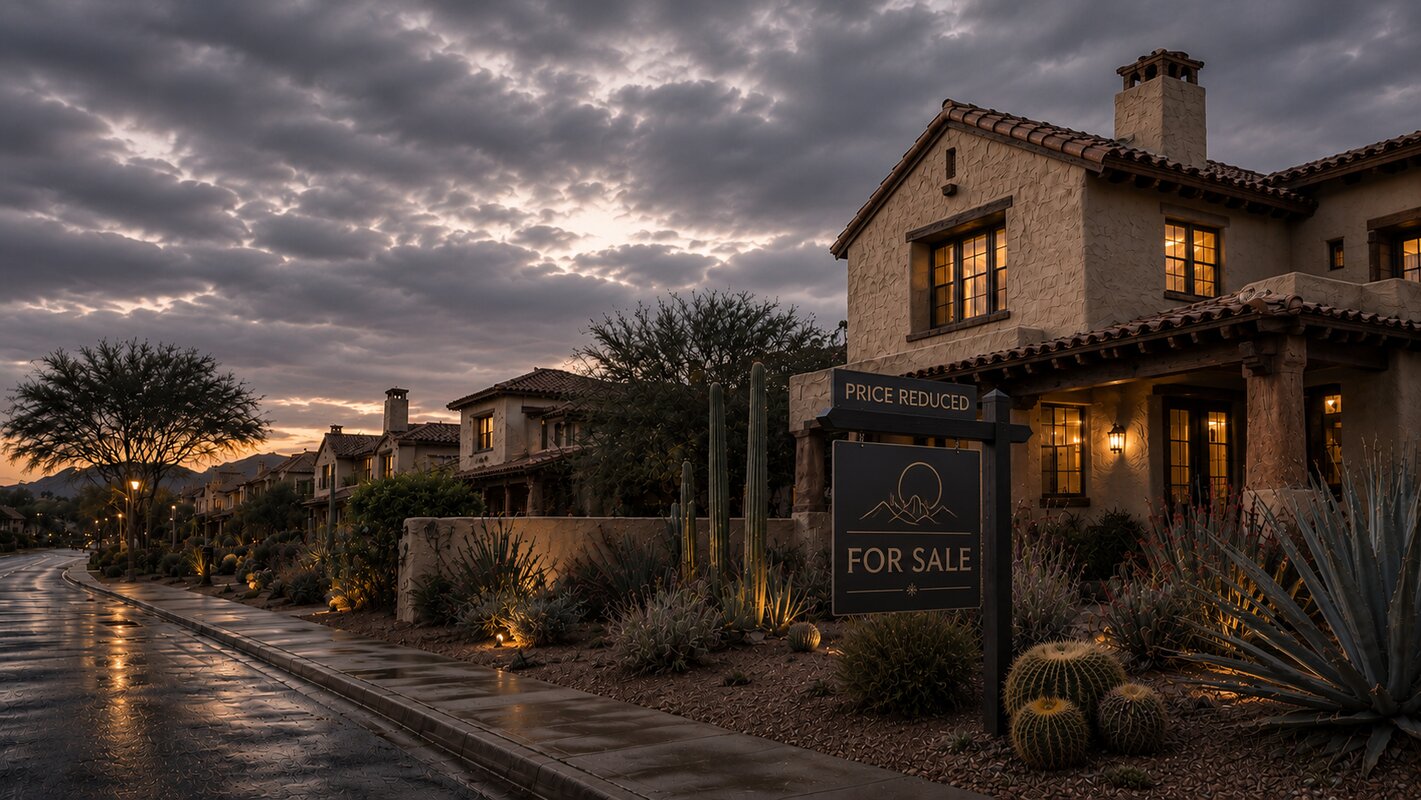
I want to talk about something I have been watching for several months something that is showing up in my conversations with buyers, in sellers’ behavior, and in the competitive intelligence I get from firms across the Valley. The data is just now confirming what experienced agents have been feeling since early spring.
The housing market is slowing. Not crashing. Not collapsing. But cooling in ways that are real, measurable, and, if you are a seller who has not yet adjusted your thinking, expensive.
And then last week, the Federal Reserve added a layer that could accelerate everything.
What the National Data Actually Shows
The Realtor.com June 2026 Monthly Housing Trends Report landed this week, offering the clearest confirmation yet of what I have been seeing on the ground.
Asking prices fell 2.5% year over year in June, the steepest annual decline since 2017 and the eighth consecutive month of price drops. Not one bad month. Eight in a row. Price cuts now appear on 18.5% of all active listings nationwide, and Realtor.com’s own economists flagged that July will be the test of whether that number accelerates.
Home price growth has essentially stopped. J.P. Morgan put a number on it earlier this year: 0% nationally for 2026. A market where prices are barely moving, and buyers are hesitant, is a market that rewards precision and punishes wishful thinking.
Seventy-seven of the nation’s 300 largest housing markets now show year-over-year price declines. That is 26% of major markets. This is not a regional anomaly. It is a national pattern.
What Is Happening Across Metro Phoenix Right Now
Metro Phoenix is not immune. I want to say that clearly, because for years the conventional wisdom was that the Valley was different: endless in-migration, nationally low state income tax, a housing pipeline that never quite caught up. Some of that is still true. But the shift underway is real.
Median days on market across Phoenix have stretched from 75 to 85 days year over year, and the median price of a single-family home has slipped to $475,000, down from $500,000 a year earlier. New listings and pending sales are both down double digits from last year, even as active inventory continues to climb. That combination; fewer buyers moving, more sellers listing is exactly the setup that pressures prices.
The submarket picture is telling. Buckeye, Goodyear, Surprise, Maricopa, and Fountain Hills have shifted meaningfully toward buyers as several years of aggressive new-home construction finally caught up with demand. Peoria and Chandler are seeing modest price pullbacks. Queen Creek is one of the few Southeast Valley cities still posting gains. The takeaway: Phoenix in 2026 is not one market. It is a dozen submarkets moving in different directions at once, and treating them as a single number is the fastest way to misprice a listing.
What Is Happening in Scottsdale and Paradise Valley
Scottsdale’s luxury market is more insulated than the broader Valley; the school-district premium, the second-home and cash-buyer base, and genuinely limited remaining land in the north provide a floor that commodity subdivisions do not. But insulated is not immune.
Here is the two-tier story in Scottsdale right now: median sale price is still up year over year, depending on the data source, somewhere between 3.7% and 6.7% — which sounds like a seller’s market on the surface. But look one layer deeper. Active inventory is up close to 30% year over year. Days on market have stretched to roughly 63 days, up from the high 50s a month earlier. The sale-to-list ratio has slipped to 96.4%, and the share of Scottsdale listings taking a price cut has climbed from 72% to over 73%. Price is still rising because the mix of what’s selling has shifted upmarket, not because every seller has pricing power. That is a very different market than the headline number suggests.
Paradise Valley is holding its position better than almost anywhere in the Valley, largely because resale inventory there remains genuinely constrained; there simply are not many Paradise Valley listings to compete against. Cave Creek is in a similar seller-leaning position. North Scottsdale above the $2 million mark, by contrast, now carries the deepest inventory it has seen in five years, and that is where I am seeing cash buyers and quick-close offers secure real concessions: price reductions, design credits, closing-cost contributions that simply were not available eighteen months ago.
The buyers I am working with in Scottsdale and North Phoenix are more deliberate, more analytical, and more willing to walk away from a property that is not priced for today’s market than any buyers I have seen in the past decade. That behavioral shift is not temporary. It is a rational response to an environment where elevated rates, 70-year-low consumer confidence, and a Fed that just threatened to raise rates further have combined to create something one economist called a psychological freeze.
The Fed Threat and Why I Think It Is Partly a Bluff
Here is where I want to give you my honest read, not just the data.
Last week, Kevin Warsh held his first press conference as Fed Chair. He stripped out the easing bias. He confirmed that nine of eighteen Fed officials now project a rate hike before year-end. Markets slid. Bond yields jumped. The message was deliberate: the Fed is not here to make your life comfortable.
I believe the hawkish signal is real. Warsh means what he says about inflation, and his commitment to price stability is not performative. But I also think the specific threat of consecutive rate hikes into this housing market is at least partially a negotiating position a message sent to inflation expectations and to markets rather than a fully committed policy path.
Here is why. The data I just walked you through describes a housing market that is already under pressure before a single additional rate increase. Eight consecutive months of national price declines. Seventy-seven markets already in year-over-year negative territory. Consumer confidence at a 70-year low. Phoenix days on market up double digits. If the Fed raises rates into this environment and housing tips from soft to genuinely distressed, the political and economic pressure to reverse course would be enormous.
Warsh knows this. Every Fed official knows this. The rate hike signal is a tool. Whether it gets deployed depends on what inflation does between now and October. If the Iran ceasefire holds and energy prices continue to ease, I would not be surprised to see the hike language quietly walk back before it is ever acted upon.
But here is the problem with betting on that outcome: you may be wrong. And in real estate, being wrong about the direction of rates at the wrong moment is not an abstract risk. It is a number on a closing statement.
What This Means for Sellers
If you are a seller in Scottsdale, Paradise Valley, Cave Creek, or anywhere across the Valley and you are still pricing based on what a comparable property sold for in 2024, you are pricing for a market that no longer exists.
The buyers who are in the market right now are doing their homework. They know the days-on-market data. They know the price cut percentages. They know what has sold nearby and what has sat. They are not going to be flattered by an aspirational price. They are going to make an offer that reflects today’s reality, or they will move on.
The sellers succeeding are those who have accepted this adjustment. A 96.4% sale-to-list ratio is not a negotiating failure; it is accurate pricing in the current environment. The sellers who insist on the number they had in their heads eighteen months ago are accumulating days on market, watching their competition price ahead of them, and eventually selling for less than they would have if they had started correctly.
Pricing is not a static decision. It is a strategic one. The market is not going to wait for your expectations to adjust.
Is your list price built for the market that exists today, or the one that existed eighteen months ago?
What This Means for Buyers
This is the first time in years that buyers have genuine leverage in the Scottsdale and North Phoenix luxury market, yet many are not using it effectively because they are waiting for even better conditions to materialize.
The data does not support unlimited waiting. If Warsh’s rate-hike threat is a bluff and inflation cooperates, the buyers who are sitting on the sidelines today will re-enter, simultaneously with every other sidelined buyer, into a market where sellers have already adjusted their prices and competition will have increased. The window of maximum leverage is not permanent. It is now.
If you are a buyer who has been deliberate and cautious, that instinct has served you well. The market has given you time, leverage, and selection that did not exist two years ago. Use it strategically rather than waiting for conditions that may never arrive.
If the leverage you have right now disappeared in sixty days, would you have already used it?
The Bottom Line
I am not predicting a crash. The school-district premium, the second-home and cash-buyer demand, and genuinely limited remaining land in North Scottsdale and Paradise Valley make a collapse scenario unlikely.
What I am saying is this: the easy market is over. The market where every property sold quickly at or above asking, where buyers waived contingencies and competed against five other offers, where sellers could price aspirationally and expect the market to meet them that market has changed. What we have now is a market that rewards preparation, precision, and honest assessment of where conditions actually are.
If you are a seller who needs a clear-eyed read on where your property should be priced today, that conversation will be more valuable in the next sixty days than it has been in the past three years.
If you are a buyer who has been waiting for the right moment, this is closer to that moment than anything you have seen recently.
Either way, the time for wishful thinking is over.
480.226.5595 – vandykegroupaz.com
Griffin Realty Group serves buyers and sellers across Scottsdale, Paradise Valley, North Phoenix, Cave Creek, and Carefree luxury real estate markets.