 See photos and updates from listings directly in your feed
 Share your favorite listings with friends and family
 Save your search and get new listings directly in your mailbox before everybody else
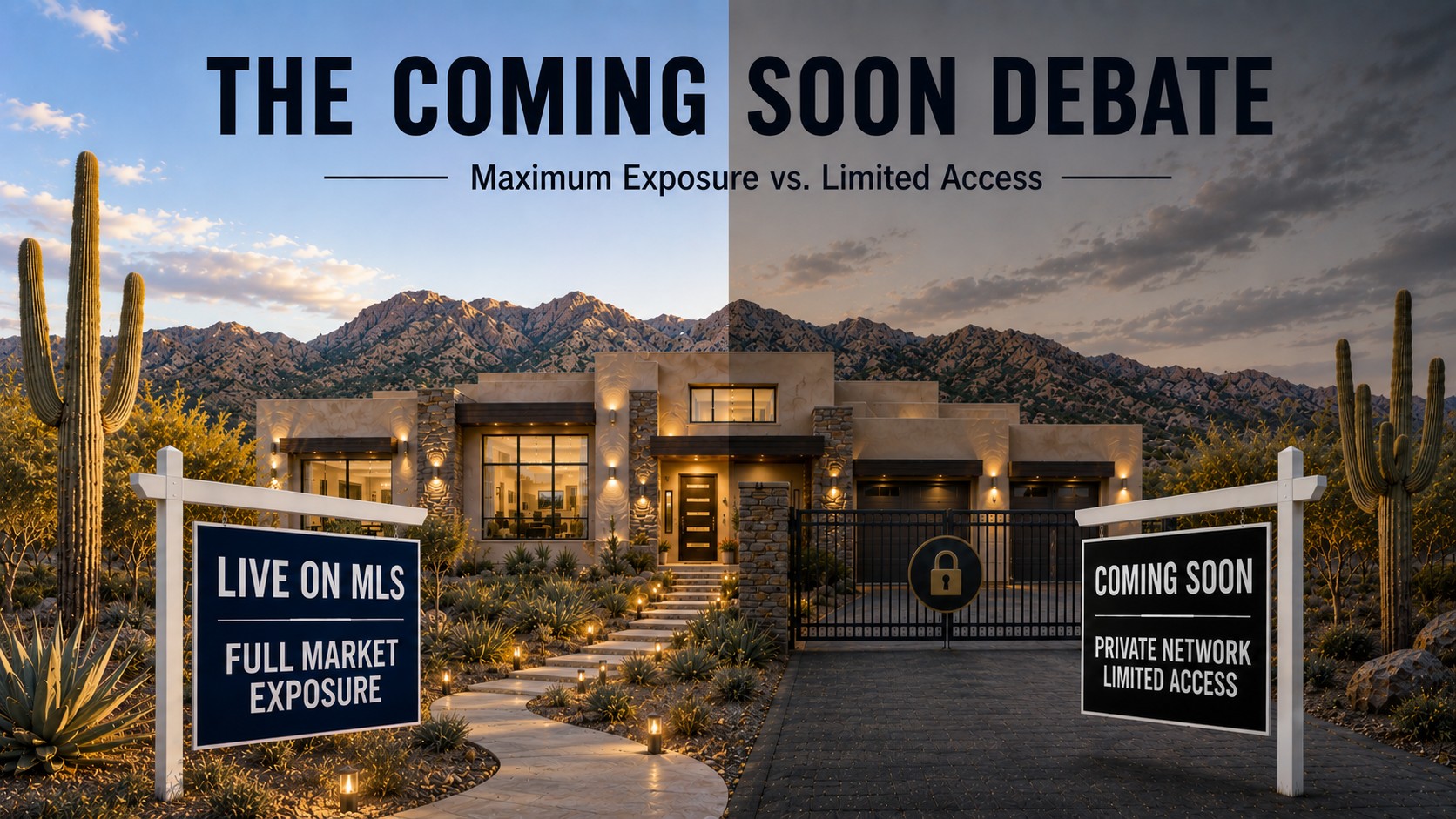
One of the biggest debates in real estate today isn’t about interest rates or home prices.
It’s about who controls listing exposure, when buyers see a home, and ultimately whether sellers are maximizing their opportunity in the marketplace.
At the center of the discussion are Coming Soon listings, private exclusives, and off-market marketing strategies that allow homes to be promoted to a limited audience before reaching the broader market.
On the surface, the concept sounds appealing.
More flexibility. More privacy. More control.
But before sellers embrace these strategies, there is one important question worth asking:
Does limiting exposure help a seller or potentially reduce competition?
For most homeowners, the objective is simple:
Sell for the highest price, with the best terms, in the shortest reasonable amount of time.
Historically, that goal has been achieved through one powerful principle:
Competition.
The more qualified buyers who know a property is available, the greater the opportunity to generate:
- Buyer interest
- Showings
- Offers
- Negotiating leverage
And ultimately…
A stronger sales price.
The Marketplace Only Works When Buyers Know a Home Is Available
A home’s value is not determined by what one buyer is willing to pay.
A home’s value is determined by what multiple buyers are willing to pay when they are competing against one another.
That concept is often referred to as price discovery.
The broader the exposure, the more accurately the market can determine value.
If ten buyers see a property, one level of demand is created.
If one hundred buyers see the property, another level of demand is created.
If the entire marketplace sees the property simultaneously, sellers have the best opportunity to discover what the market is truly willing to pay.
Maximum exposure isn’t just marketing. It’s price discovery.
Why This Debate Has Become So Heated
The current dispute involves MLS organizations, large brokerages, and real estate portals.
Each side argues they are protecting consumer interests.
Yet beneath the headlines lies a much larger issue:
Control of inventory.
Listings are the fuel that powers the real estate industry.
Who gets access first…
Who controls distribution…
Who captures buyer inquiries…
Those questions carry enormous business value.
Unfortunately, consumers can easily get caught in the middle of a corporate battle that has very little to do with their personal goals.
The more important question is whether sellers are receiving full transparency about the trade-offs involved.
In other words:
Are homeowners making an informed decision, or are they simply hearing a marketing pitch?
Sellers deserve to understand both sides of the equation.
Potential Advantages of Limited Exposure
- Privacy concerns
- Security considerations
- Tenant-occupied properties
- Pre-market preparation
- Unique personal circumstances
Potential Risks of Limited Exposure
- Fewer buyers are seeing the property
- Reduced competition
- Less urgency
- Fewer offers
- Potentially weaker price discovery
Neither side should be ignored.
A seller cannot make an informed decision without understanding both.
Seller Choice Matters, But So Does Seller Awareness
The phrase “seller choice” sounds consumer-friendly.
And in principle, it absolutely is.
However, choice only creates value when consumers understand the consequences of each option.
A seller may choose privacy.
A seller may choose exclusivity.
A seller may choose a limited rollout.
Those are all legitimate decisions.
But sellers should also understand that:
Privacy and maximum exposure are rarely the same thing.
The benefits of one often come at the expense of the other.
The Question Every Seller Should Ask
Instead of focusing on industry politics, MLS policies, or brokerage talking points, homeowners should ask one simple question:
Will this strategy expose my home to the largest pool of qualified buyers possible?
If the answer is yes, the seller is likely maximizing opportunity.
If the answer is no, the seller should understand exactly why and determine whether the trade-off is worth it.
The Bottom Line
There are situations where private marketing and Coming Soon strategies make sense.
But for the typical seller whose primary objective is achieving the strongest possible price, broad market exposure remains one of the most powerful tools available.
Before choosing any marketing strategy, make sure you understand:
✔ Who will see your home
✔ Who will not see your home
✔ How long will the exposure be limited
✔ Whether buyer competition is being expanded or restricted
Because at the end of the day:
Private access may create exclusivity.
Broad exposure creates competition.
And competition is often what produces the strongest result for a seller.