 See photos and updates from listings directly in your feed
 Share your favorite listings with friends and family
 Save your search and get new listings directly in your mailbox before everybody else
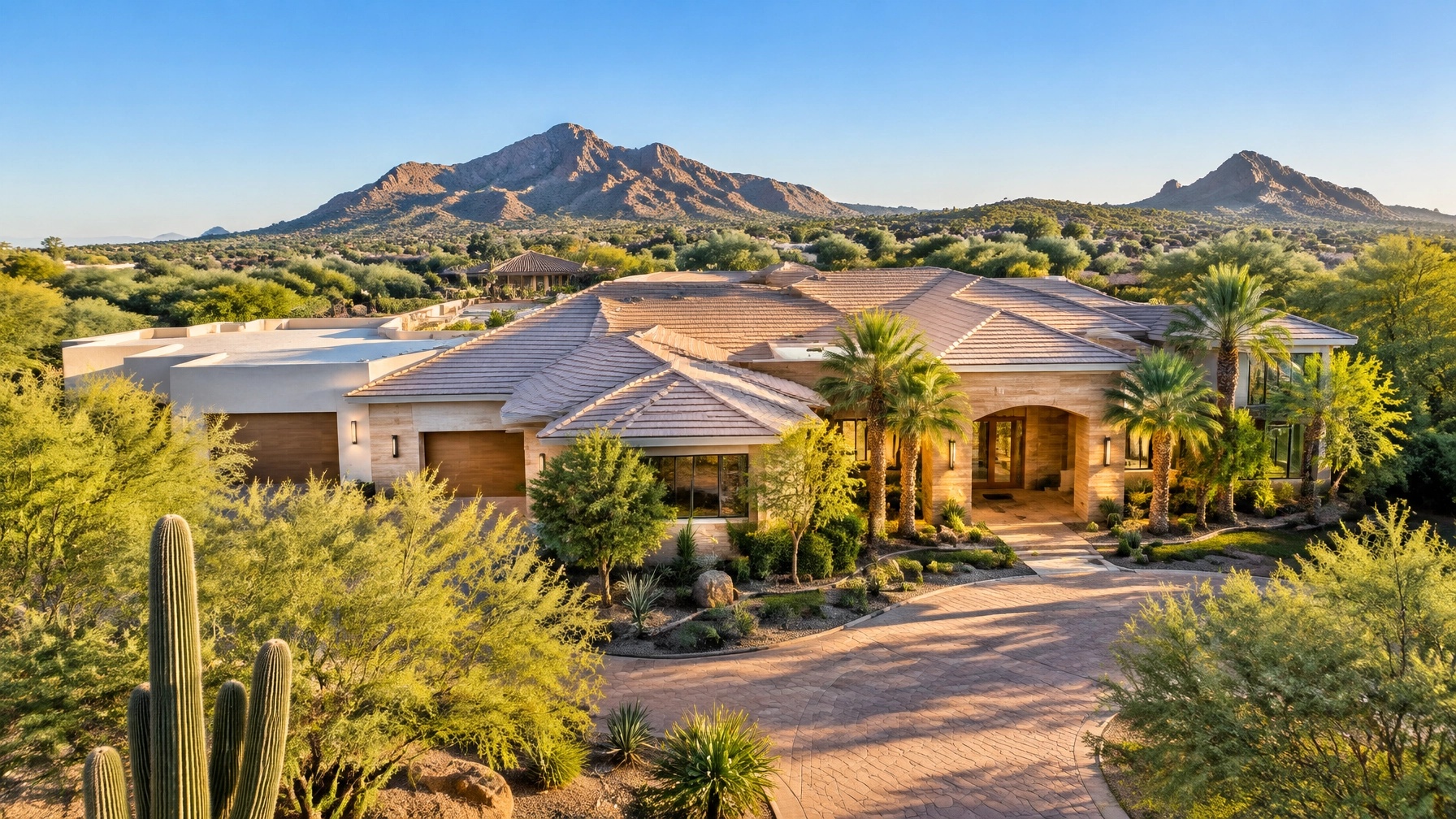
Metro Phoenix is not one market right now. It’s several, moving at different speeds, and nowhere is that more obvious than the gap between Scottsdale’s broader housing market and Paradise Valley’s upper tier.
I spend most of my time working in exactly that gap: Scottsdale, Paradise Valley, North Phoenix, Cave Creek, and Carefree, and the 2026 numbers back up something I’ve been telling buyers and sellers in conversation for months: the $3 million to $10 million Paradise Valley segment is behaving nothing like the rest of the market around it.
That doesn’t mean everything is selling fast or over ask. It means the best Paradise Valley properties still have structural advantages that simply don’t exist anywhere else in the Valley, and those advantages are showing up in the data.
Where the Numbers Stand
Scottsdale’s citywide median listing price is around $916,000 as of August 2026 on Realtor.com, though other 2026 snapshots put the citywide figure closer to $1.05 million, depending on the dataset. Citywide Days On Market sit at 80. North Scottsdale’s median listing price is closer to $1.35 million.
Paradise Valley’s luxury segment tells a different story. The Institute for Luxury Home Marketing put the median luxury sale price at $4.6 million in July 2026, with a median of 67 days on market for July closings up from 58 days a year earlier and a sale-to-list ratio of 94.14%.
The Scottsdale REALTORS Paradise Valley market report put the median estimated property value near $3.53 million as of May 2026, up 9.7% over the prior twelve months, with roughly 319 active properties across the broader residential category and a median active list price close to $5 million in April.
I’ll be straight with you: these figures don’t all line up neatly because they measure different things. Luxury-only closings, active listings, and automated valuations aren’t interchangeable numbers. But the pattern underneath is consistent Paradise Valley remains supply-constrained and high-value, even as buyers have more time and more negotiating room than they did during the tightest seller’s-market years.
What “Holding” Actually Looks Like on the Ground
Holding doesn’t mean every home sells at list. Plenty of Paradise Valley transactions close below asking, and buyers are more selective than they were two years ago. What holding actually means is this: pricing has stayed resilient relative to the rest of the Valley, quality properties keep pulling qualified buyers, land and view corridors keep mattering even on homes that need work, and low turnover keeps the pool of true comparables thin. A well-positioned property can sit for a while and still be exactly the right home for the right buyer when that buyer shows up.
Why Paradise Valley Doesn’t Compare to Anywhere Else
My background is in architecture and urban design, and it shapes how I look at every Paradise Valley listing because in this market, you’re rarely just comparing square footage.
Paradise Valley’s best homes combine large usable lots, mature landscaping, privacy, real architectural quality, and proximity to the Camelback Mountain and Mummy Mountain corridor. None of that is easy to replicate. When I walk a $4 million to $7 million property with a buyer, we’re evaluating lot size and usable land, orientation and privacy, the actual view corridor toward Camelback or Mummy Mountain, distance from neighboring structures, construction quality, outdoor living space, remodel history, primary suite placement, and whether there’s real potential for future renovation or a rebuild. Line up enough of those in one property and the list of genuine substitutes gets very short, very fast.
Cash is a real force in this segment. One 2026 analysis put cash purchases at roughly 54% of Paradise Valley luxury transactions through the second quarter, though the share shifts by price band. Cash doesn’t remove negotiation from the table. It changes the terms of it. A cash buyer can offer no appraisal contingency, a faster close, and fewer financing conditions, which matters to a seller on a $5 million or $10 million deal. But cash alone isn’t a reason to overpay; condition, land value, and comparable sales still drive the number.
Land is also its own conversation, separate from the structure sitting on it. A dated home on an exceptional lot can outperform a newer home on a compromised site, especially in the Mummy Mountain and Camelback corridor, where terrain, setbacks, drainage, and what’s happening on neighboring parcels can move value more than a kitchen remodel ever will. And unlike much of North Scottsdale, Paradise Valley’s $3M–$10M tier has little new-construction competition; buyers mostly weigh existing bespoke homes, major remodels, tear-down opportunities, and raw land against each other, which raises the stakes on getting the condition analysis right.
How I Tell Buyers to Evaluate a Paradise Valley Property
Days on market alone won’t tell you what you need to know. A home sitting for 90 days could be overpriced, or it could be a $9 million listing waiting for a very specific buyer in a thin pool. At this level, low transaction volume naturally stretches out timelines.
Instead, I walk every buyer through five questions:
Is the lot better than the house? Look at size, usable area, slope, setbacks, access, privacy, and the building envelope first. You can remodel a house. You usually can’t fix a compromised lot.
Is the view actually protected? A current view toward Camelback or Mummy Mountain isn’t automatically permanent; check surrounding parcels, height limits, zoning, and what could still be built nearby.
Are there flood or grading issues? Get real reports on drainage, flood exposure, grading, retaining walls, and site access. These affect insurance, future construction, and resale, not just today’s comfort.
Is the remodel actually finished? Beautiful finishes don’t tell you about permits, roof age, HVAC, plumbing, electrical, windows, waterproofing, or structural work. Ask past the surface.
Is this a home or a land play? Sometimes the honest answer is that the structure is limiting the value, and the property is really being priced as land with a house attached.
What Sellers Need to Do Differently This Year
Even at the top of the market, a $5 million listing doesn’t sell itself just by hitting the MLS. I focus sellers on four things: price against current competition using real comps, withdrawn listings, and actual buyer behavior not a prior high-water mark or an assumption that a great address covers for pricing; position the home around its real strengths, whether that’s land, privacy, architecture, views, or proximity to the Camelback corridor; reach beyond public portals through relocation networks, private advisors, wealth managers, architects, and agent-to-agent relationships, because professional photography and MLS exposure are only part of the plan; and manage the first response closely showing activity, feedback, and offer quality tell you fast whether pricing, presentation, or terms need to move, and waiting months to react costs leverage.
This is the backbone of my Seven-Step Seller Plan: understand the property and market, set the strategy, prepare the home, execute the marketing, manage activity, negotiate terms, and manage the transaction to closing.
A Plan Gives Buyers Control
Buyers working in Paradise Valley, North Scottsdale, DC Ranch, Old Town Scottsdale, Cave Creek, and the surrounding luxury communities need more than a list of active homes. They need to know which properties are truly comparable, whether the price reflects land or improvements, how similar homes actually sold, what contingencies make sense, which inspections need specialists, and how to structure a cash or financed offer to compete.
That’s what my Six-Step Buyer Plan is built for: define objectives, identify opportunities, evaluate value, negotiate the offer, complete due diligence, and manage the transaction through closing.
Where This Leaves Us in 2026
Paradise Valley’s luxury segment is holding because the best properties are genuinely difficult to replace: limited land, scarce view lots, low turnover, strong cash participation, and almost no new-construction competition at this price point. That doesn’t mean the market runs on autopilot. Sellers still need real pricing discipline and positioning. Buyers still need to evaluate the lot, the view corridor, the grading, and the true condition of any remodel before trusting a list price or a days-on-market number.
If you’re weighing a Sale or Purchase between roughly $3 million and $10 million, that’s exactly the conversation I have every day. (480) 318-5454 · vandykegroupaz.com — Griffin Realty Group serves Sellers and Buyers across Scottsdale and the Metro Phoenix Luxury Real Estate Markets.